Design & Quality
GFRP Design: Standards, Engineering, and Quality Requirements
A practical overview of the standards, engineering requirements, laminate design, and quality controls behind industrial GFRP equipment.
What Is GFRP Design?
GFRP design is the engineering process used to determine the construction, dimensions, materials, laminate structure, thickness, reinforcement, and configuration of GFRP composite equipment.
The design process should consider chemical exposure, operating temperature, pressure or vacuum, liquid specific gravity, mechanical loads, wind or seismic loads where applicable, support conditions, and installation requirements.
GFRP Design Standards
Standards provide an important technical reference for designing and manufacturing composite equipment. Depending on the product, service conditions, and project requirements, ASME RTP-1 and applicable ASTM, ANSI, ISO, DIN, JIS, BS/EN, or customer specifications may be relevant.
For suitable equipment applications, these references can establish requirements for material selection, laminate construction, fabrication, dimensional tolerances, inspection, testing, quality control, and documentation. For certain applications they relate to corrosion-resistant equipment.
Engineering Requirements for GFRP
Engineering should connect material selection and structural requirements with the actual operating conditions of the equipment. Resin selection, reinforcement, corrosion barriers, laminate construction, thickness, support arrangements, and loading conditions can influence final performance.
GFRP Laminate Design
One of the most important parts of GFRP design is the laminate structure. The arrangement and type of resin and reinforcement layers influence mechanical properties and overall performance. Proper laminate design helps ensure sufficient strength and durability for the intended service.
Quality Requirements in GFRP Fabrication
Important quality requirements may include control of raw materials, resin and reinforcement, laminate thickness, curing, dimensional accuracy, workmanship, and final inspection. Depending on project requirements, testing may include visual and dimensional inspection, laminate thickness measurement, Barcol hardness testing, spark testing, hydrostatic testing, vacuum testing, and leak testing.
Engineering and Fabrication at Diwan Budi Perkasa
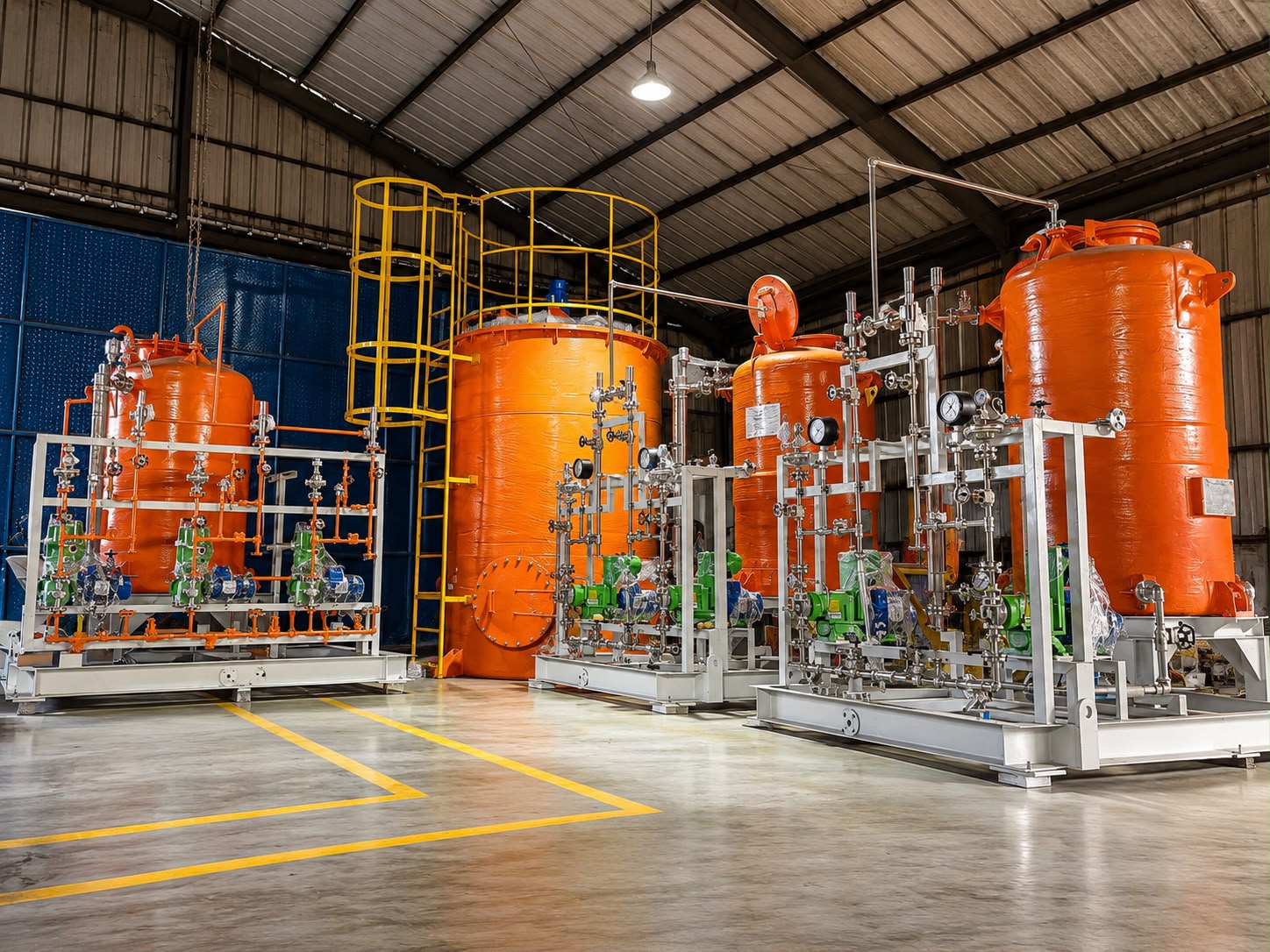
Diwan Budi Perkasa's integrated engineering advantage connects design requirements with actual fabrication and project execution for tanks, vessels, piping, scrubbers, ducting, stacks, fittings, lining systems, and customized composite equipment.
Why Proper GFRP Design Matters
Selecting the right standard, understanding operating conditions, designing the laminate correctly, and maintaining fabrication quality are essential parts of a successful industrial project.
Discuss Your Project
Need Certified GFRP Engineering for Your Facility?
Consult Diwan Budi Perkasa's engineering team for technical assessments and custom laminate designs.
Contact Our Engineering Specialistsarrow_forwardRead Other Articles